
"28 name"
2000 article(s) found

How many common coffee beans are there
Professional coffee knowledge exchange more coffee bean information please follow the coffee workshop (Wechat official account cafe_style) A brief introduction to common coffee varieties in the front street Tibica (also known as Typica) Tibica is the native species of all Arabica varieties. It is said that Tibika originated in southern Sudan, flourished in Ethiopia and was finally planted in Yemen around the 7th century AD.

This is a different fish.
Professional coffee knowledge exchange more coffee bean information please follow the coffee workshop (Wechat official account cafe_style) this batch of AA coffee fruits are picked and processed by 250 farmers in the Kongyu processing plant under the jurisdiction of the Kabare farmers' cooperative. After peeling, fermenting and cleaning the coffee from the nearby Kongyu River, the coffee will be used in an African drying bed for drying. Every one of them.

How Much Does Kenya Cost for Coffee?
Professional barista communication please pay attention to coffee workshop (Weixin Official Accounts cafe_style ) Flavor description: strong lemon and plum dry and wet aroma, light roast sip has flowers, lemon and other amazing aroma, as well as grapefruit green tea, citrus juice sweet and sour juicy, slightly deepened roast immediately with honey, pot black plum flavor, aftertaste is more green tea

Kenya AA | Chianbu production area | 3G processing Plant | SL28/SL34
Professional coffee knowledge exchange more coffee bean information please follow the coffee workshop (Wechat official account cafe_style) front street coffee individual coffee recommendation | Kenya AA Asali Kenya Kiambu 3GS AA Kenya AA Chiambu 3G processing factory flavor description: blackcurrant mixed with some blueberries, orange juice-like acidity, taste thick and full, caramel aftertaste located in East Africa
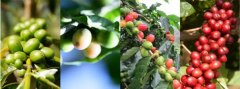
Manor Coffee in Guatemala New Oriental Guava Plain Manor Wine Sun treatment SL28 species
Guatemala is one of the most important coffee producing countries in Central America, with long mountains and different regional climates, thus creating eight major coffee producing areas in Guatemala, all located on the highland topography of the subtropical climate, with abundant and stable rainfall and fertile volcanic ash soil is an excellent environment for coffee trees to grow. PlandelGuayabo is located next to the VolcndeSuchitn volcano, in the west.

Kenya washing AA grade Klinga producing area Kabarekong fish processing plant order baking boutique coffee
The fresh coffee of this batch of Kongyu AA was picked and processed by 250 farmers in Kongyu Processing Plant under Kabare Farmers Cooperative. Coffee is peeled, fermented and washed in nearby river water and dried on African drying beds. Each harvest season, farmers will process nearly 300 tons of fresh coffee. After processing, it will participate in the three weekly elections in Nairobi

The complex and changeable acidity and sweetness of SL34 and SL28 on coffee
Professional coffee knowledge exchange more coffee bean information Please pay attention to the coffee workshop (Wechat official account cafe_style) High-quality Kenyan coffee beans are widely planted between 1300 and 2100 meters above sea level, just below the equator in Kenya, about 6 million people are engaged in the coffee industry, mostly in the form of a combination of small farmers and cooperatives. The main planting areas include Ruiri and Thik.

Kenya washed AA Klinga production area Cabaret hole fish processing plant boutique coffee bean variety cultivation
Coffee trees in Kenya are mostly planted at 1400 m-2000 m above sea level, and the growth areas include Ruiri, Thika, Kirinyaga and Mt. Kenya West, Nyeri, Kiambu and Muranga. Mainly in the foothills of Mt.Kenya and Aberdare. There are many producing areas in Kenya that strive to preserve the native forest ecosystem, protect the natural gene pool, and support the breeding of wild coffee varieties.

Kenya Nyeri | Mtaro estate Monteiro (waterway) treatment plant PB adzuki bean SL28, SL
Professional coffee knowledge exchange more coffee bean information please follow the coffee workshop (Wechat official account cafe_style) Kenya Nyeri | Mtaro estate Monteiro (waterway) processing plant PB adzuki bean SL28, SL34 flavor? Kenya is a model country for fine coffee beans, most of which are graded by the Kenya Coffee Bureau and sold at auctions.

Kenya washed AA grade Klinga producing area Kabarekong fish processing plant fine coffee bean flavor taste
Flavor Description: Intense dry and wet aromas of lemon and plum. When lightly roasted, it has a variety of amazing aromas such as floral, lemon, etc. It also has sweet and sour juicy flavors such as grapefruit green tea and citrus juice. Slightly roasted, it has various flavors such as honey and black plum in the pot. The aftertaste is a lot of sweet and sour taste of green tea.

Introduction of Kenyan coffee varieties Kenya SL28 and SL34 the characteristics of Kenyan coffee made by hand
Professional coffee knowledge exchange more coffee bean information Please follow Coffee Workshop (Wechat official account cafe_style) "Kenya" in East Africa is one of the major coffee producing countries. More than 6 million people in the country are engaged in the coffee industry, mostly in the form of a combination of small farmers and cooperatives. Coffee trees in Kenya are mostly planted at 1400-2000 meters above sea level, and the growth area includes Ruiri.
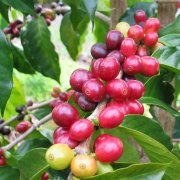
Boutique coffee SL28 variety is extremely rare in Central America, this tree species originated from Tanzania in East Africa
SL28 is extremely rare in Central America. This tree species originated from Lake Tanganyika in East Africa. It was discovered in 1931. Its leaves are broad and reddish. It can adapt to quite high altitude environment. It has excellent drought resistance and disease resistance. It also has higher yield than traditional trees. The performance of flavor is also unique. 1935 Scottish Labo

Kenyan coffee varieties SL28 and SL34 introduce why Kenyan coffee is sour
Professional coffee knowledge exchange more coffee bean information Please follow Coffee Workshop (Wechat official account cafe_style) located in East Africa Kenya is one of the major coffee producing countries. More than 6 million people in the country are engaged in the coffee industry, mostly in the form of a combination of small farmers and cooperatives. Coffee trees in Kenya are mostly planted at 1400-2000 meters above sea level, and the growth areas include Ruiri and Thi.

Introduction to the Historical and Cultural Story of Brazilian Coffee Bean varieties the flavor and taste characteristics of iron pickup coffee bean cup
Following Cafe Review (Wechat official account vdailycom) found that Beautiful Cafe opened a small shop of its own Brazilian Coffee refers to coffee produced in Brazil. There is a wide variety of Brazilian coffee, the vast majority of which are unwashed and sun-dried, classified according to the name of the state of origin and the port of transport. Brazil has 21 states and 17 states produce coffee, but four of them produce the most coffee.

Kenya | Lumukiya Cooperative Songri treatment Plant TOP PB SL34/SL28
For more information on coffee beans, please follow the coffee workshop (Wechat official account cafe_style) Kenya | what is the flavor of TOP PB SL34/SL28 in Lumuqiya Cooperative Songri processing Plant in Guangxi? Kenya, located in East Africa, is one of the major coffee producing countries. More than 6 million people in the country are engaged in the coffee industry, mostly a combination of small farmers and cooperatives.

Kenyan coffee varieties SL28, SL34 introduce how to drink Kenyan coffee handcups?
Professional coffee knowledge exchange more coffee bean information Please follow the coffee workshop (Wechat official account cafe_style) more than 6 million people in China are engaged in the coffee industry, mostly in the form of a combination of small farmers and cooperatives. Coffee trees in Kenya are mostly planted at 1400 m-2000 m above sea level, and the growth areas include Ruiri, Thika, Kirinyaga and Mt. Kenya West 、 Nyeri

What are the common types of coffee beans? what are the characteristics of the comparison of common coffee beans?
Professional coffee knowledge exchange more coffee bean information please follow Coffee Workshop (Wechat official account cafe_style) Tibica (also known as Typica) Tibica is the native species of all Arabica varieties. It is said that Tibika originated in southern Sudan, flourished in Ethiopia and was finally planted in Yemen for commercial production around the 7th century AD. Emperor

Characteristics of Kenya hole fish beans Kenyan hole fish coffee drinking method
Professional baristas Please follow the Coffee Workshop (Wechat official account cafe_style) the fresh coffee fruits of this batch of hole fish AA are picked and processed by 250 farmers in the Kongyu processing plant under the jurisdiction of the Kabare farmers' cooperative. After peeling, fermenting and cleaning the coffee from the nearby Kongyu River, the coffee will be used in an African drying bed for drying. Every picking season, farmers are going to

What kind of coffee is Ethiopia? introduction to the origin and variety of coffee beans.
Professional coffee knowledge exchange more coffee bean information please follow the coffee workshop (Wechat official account cafe_style) front street-Ethiopian coffee beans, coffee varieties and producing areas brief introduction to most Ethiopian varieties will be named after this name, small farmers from various forests and their own back garden picked various varieties of coffee and sent to the cooperative for centralized processing, varieties can be said to be

How does Kenyan hole fish taste? how does Kenyan coffee brew?
For the exchange of professional baristas, please follow the hole fish made by hand in the coffee workshop (Wechat official account cafe_style). 15g powder, medium fineness grinding (small Fuji ghost tooth cutter 3.5grinding), v60 filter cup, 9193 degrees water temperature, 30g water injection for the first time, steaming for 27 seconds, water injection to 105g water cut off, wait for the water volume of powder bed to be reduced to half and then water injection, slow water injection until 225g water, do not use water at the end.